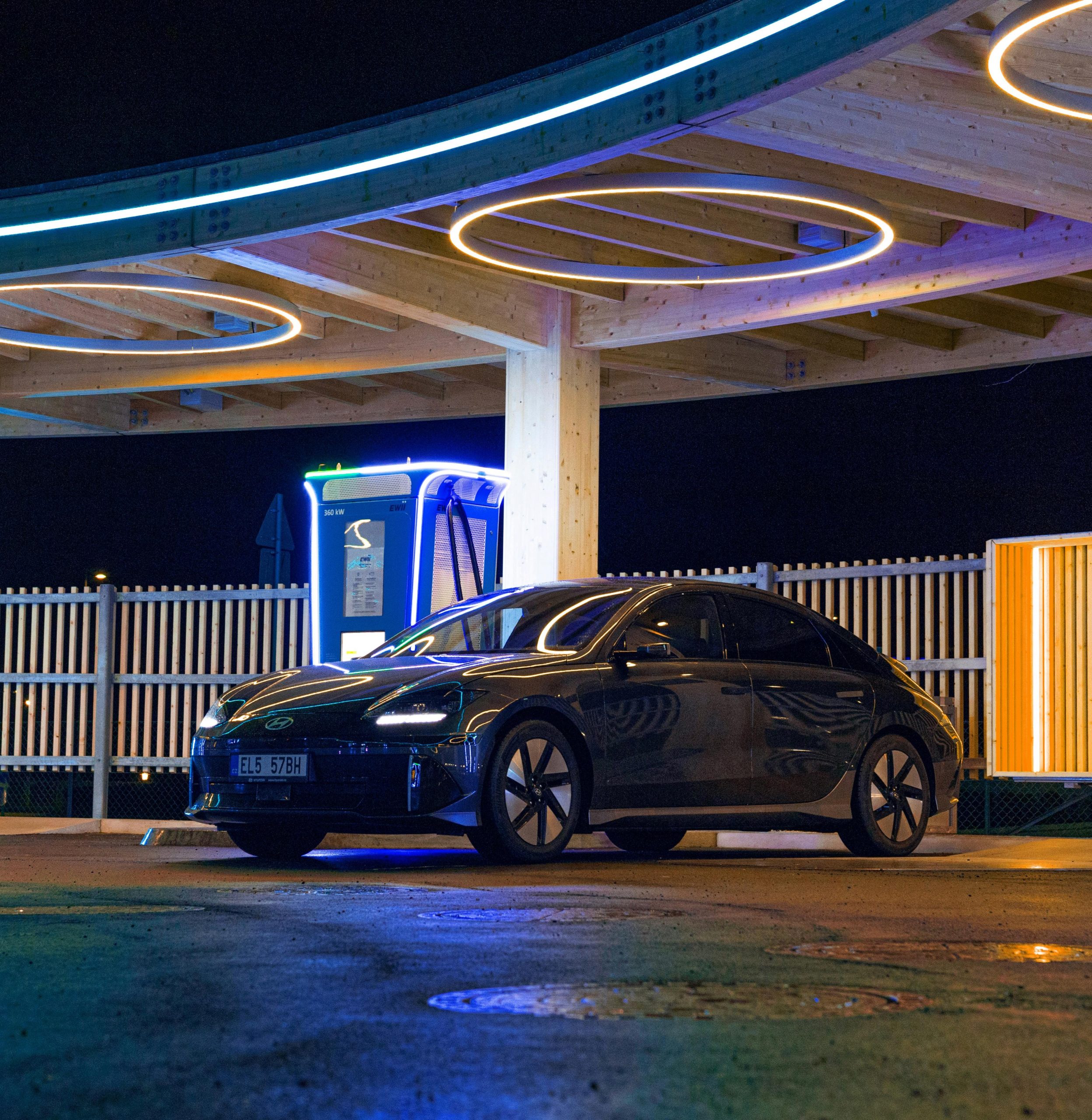



Installing charging infrastructure alone does not guarantee economic success. For Charge Point Operators (CPOs), the strategic focus is shifting from deploying individual charging points to building fully integrated, performance-driven site concepts. Intelligent integration into existing parking assets unlocks new potential for higher utilization, stronger revenue generation, and long-term profitability.
In an increasingly competitive market, success is no longer defined by the number of installed chargers, but by strategic placement, smart energy management, and operational optimization.
Many CPOs begin with a technology-first approach: hardware selection, installation capacity, and grid connection are the primary priorities. However, sustainable profitability emerges only when charging infrastructure is treated as part of a broader location and user-experience strategy.
Parking garages, retail centers, office buildings, and mixed-use developments all present different user behaviors, dwell times, and charging needs. Smart parking integration analyzes:
Based on this data, charging capacity, charger type, and monetization models can be accurately dimensioned. Instead of overbuilding or underutilizing assets, CPOs can align infrastructure investment with real demand patterns.
Utilization rate is the most important lever for profitability. High technical availability is insufficient if chargers are used only sporadically. Through intelligent integration with parking management systems, CPOs can:
The combination of parking infrastructure and charging solutions creates operational synergies that stand-alone charging stations cannot achieve. Dwell times become more predictable, and energy demand can be forecasted more accurately.
Higher utilization directly accelerates CAPEX recovery and improves long-term margin stability.
Grid connection fees and peak demand charges represent significant cost factors for CPOs. Smart parking integration enables the implementation of dynamic load management systems that adapt charging power in real time based on overall site consumption.
In urban parking structures with limited grid capacity, this is particularly critical. Prioritized charging schedules, time-based distribution, and integration of on-site renewable energy sources can substantially reduce operational costs.
For CPOs, this translates into:
Charging infrastructure thus becomes not only a revenue generator but also a controllable cost structure.
Smart parking integration generates valuable operational data. Occupancy rates, charging duration, energy consumption, user behavior, and revenue metrics can be monitored in real time. For CPOs, this creates multiple advantages:
Rather than operating reactively, CPOs can manage their networks proactively, adjusting performance parameters based on measurable outcomes. Infrastructure evolves into a scalable, data-enabled platform rather than a static hardware deployment.
Future-ready CPO business models cannot rely solely on energy sales. Integration with parking systems opens additional revenue streams, including:
Partnership-based structures create longer contractual terms and more stable cash flows. Instead of transactional income only, CPOs can secure recurring revenue tied to broader mobility services.
This shift from pure energy sales to integrated mobility solutions significantly enhances long-term ROI potential.
Another key advantage of smart integration is scalability. Many parking assets provide expansion potential that can be developed step by step. CPOs can initially deploy a base level of infrastructure and expand modularly as demand increases.
This phased approach reduces upfront capital exposure while maintaining growth flexibility. It also allows operators to test performance metrics before committing to full-scale rollouts.
In a market characterized by rapid technological evolution, modularity reduces risk and increases strategic agility.
Beyond financial metrics, user experience plays a decisive role. Seamless integration between parking, charging, and payment processes increases customer satisfaction and repeat usage. Digital access systems, automated billing, and transparent pricing strengthen brand positioning.
As charging hardware becomes increasingly standardized, service quality and ecosystem integration become primary differentiators. CPOs that offer frictionless end-to-end experiences are better positioned to retain customers and secure long-term partnerships.
For CPOs, economic success begins not with installation, but with integration. Smart parking integration transforms charging infrastructure from an isolated technical solution into a scalable, data-driven business model.
By increasing utilization, optimizing energy costs, expanding monetization models, and enhancing user experience, operators can significantly improve ROI. In a maturing EV charging market, those who treat parking not merely as a physical location but as a strategic component of value creation will achieve sustainable competitive advantage.